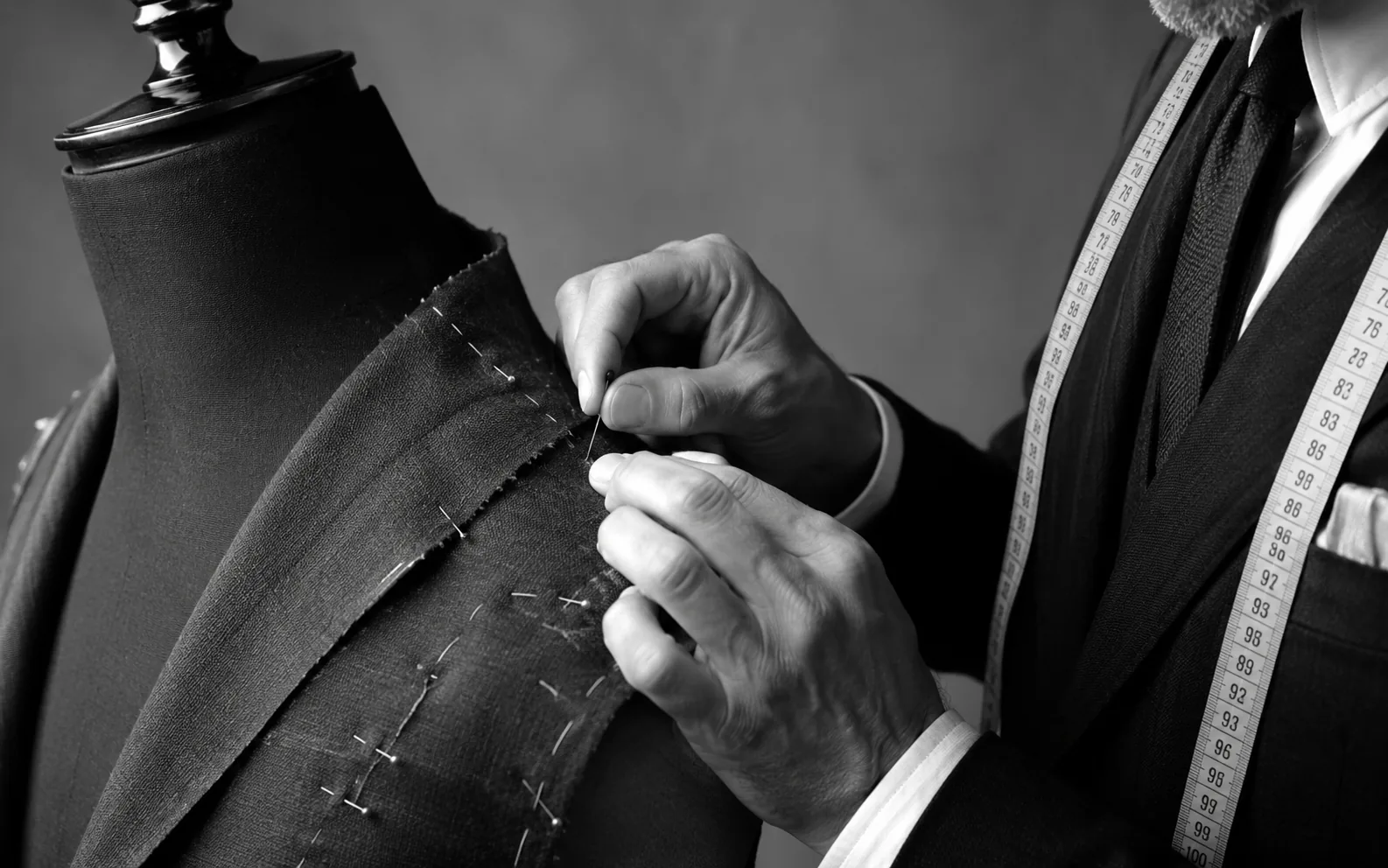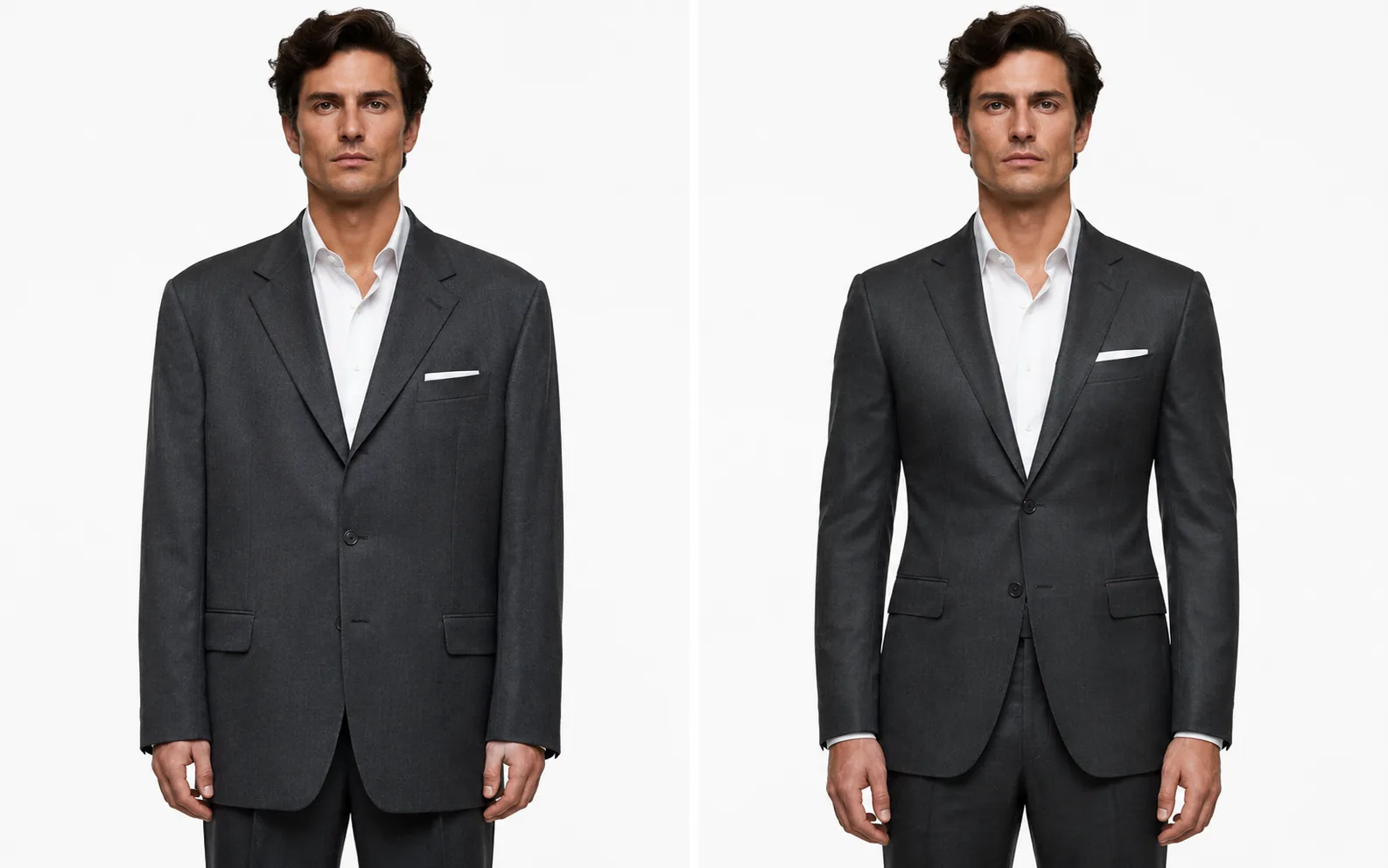
The dirty secret of well-dressed men is that many of them aren't wearing bespoke or even made-to-measure. They're wearing off-the-rack clothing that's been strategically altered — sometimes just one or two adjustments — to fit their specific body. The difference between a garment that's been altered and one that hasn't is immediately visible, even if the observer can't articulate why.
Highest Impact: Trouser Hemming
The single most impactful alteration is also the cheapest: hemming trousers to the correct length. Most men wear their trousers too long, creating an excess of fabric that pools at the ankle and obscures the shoe. This one detail — which costs between eight and fifteen pounds — transforms the entire lower half of an outfit from sloppy to precise.
The correct length depends on style and preference. A full break creates a single fold of fabric at the shoe. A half break barely touches the shoe, showing a sliver of sock. No break — the trouser hem hovers just above the shoe — is the most contemporary option and reads as deliberately tailored. Choose based on the formality of the garment and your personal aesthetic.
Second Priority: Jacket Waist Suppression
Off-the-rack jackets are cut to accommodate the widest possible range of body shapes, which means they're typically straight through the torso — no curve at the waist, no taper below the chest. For most men, having the waist taken in by 1-2 centimetres on each side creates a dramatically more flattering silhouette. The jacket suddenly has shape. It follows the body rather than hanging like a rectangle.
This alteration runs between twenty-five and forty pounds depending on complexity. It requires opening the back seam and side seams, reshaping the panels, and pressing everything back into alignment. A good tailor can do it in a week.
Sleeve Length Adjustment
Jacket sleeves should end precisely at the wrist bone, revealing approximately 1-1.5 centimetres of shirt cuff. Most off-the-rack jackets run slightly long, hiding the shirt cuff entirely. Shortening the sleeves is a straightforward alteration — around fifteen to twenty pounds — that immediately elevates the formality and precision of the jacket.
Note that sleeve shortening from the cuff is simpler and cheaper than shortening from the shoulder. If possible, choose a jacket whose shoulders fit correctly and whose sleeves are too long rather than the reverse.
The Strategic Approach
Not every garment warrants alteration. Reserve your tailoring budget for pieces you wear frequently and that sit in the upper half of your wardrobe's quality range. A cheap fast-fashion blazer that you'll discard in six months isn't worth forty pounds of alterations. A well-constructed wool jacket that you'll wear for five years absolutely is. Think of alterations as an investment multiplier — they make good pieces excellent but can't rescue fundamentally poor garments.