Fabric is the medium of clothing in the same way that paint is the medium of art. Understanding it — even at a basic level — transforms how you buy, wear, and care for your garments. You don't need a degree in textile science. You need enough knowledge to make informed choices rather than relying on price tags as a proxy for quality.
Weight and Season
Fabric weight is measured in grams per square metre (GSM) or, in traditional British tailoring, ounces per yard. Lighter fabrics — 200-280 GSM — suit summer. Heavier fabrics — 340-400 GSM — belong to autumn and winter. The space between is year-round territory, and it's where most of your wardrobe should live if you're in a temperate climate.
A 300 GSM worsted wool in mid-grey will carry you from September through May in most British conditions. It's heavy enough to hold its shape and retain warmth, light enough that you won't overheat in a heated office. This is the sweet spot — the fabric weight that does the most work for the least thought.
Natural Versus Synthetic
Natural fibres — wool, cotton, linen, silk — breathe better, drape more naturally, and age more gracefully than synthetics. They also wrinkle more readily and generally cost more. The trade-off is almost always worth making for garments you'll wear close to the body or for extended periods.
Synthetic blends have their place. A small percentage of elastane (2-3%) in cotton or wool adds recovery without sacrificing the natural fibre's character. Performance fabrics make sense for specific applications — travel, sport, extreme weather. But as a general principle, prioritise natural composition for anything that touches skin or that you want to last more than two seasons.
The Essential Weaves
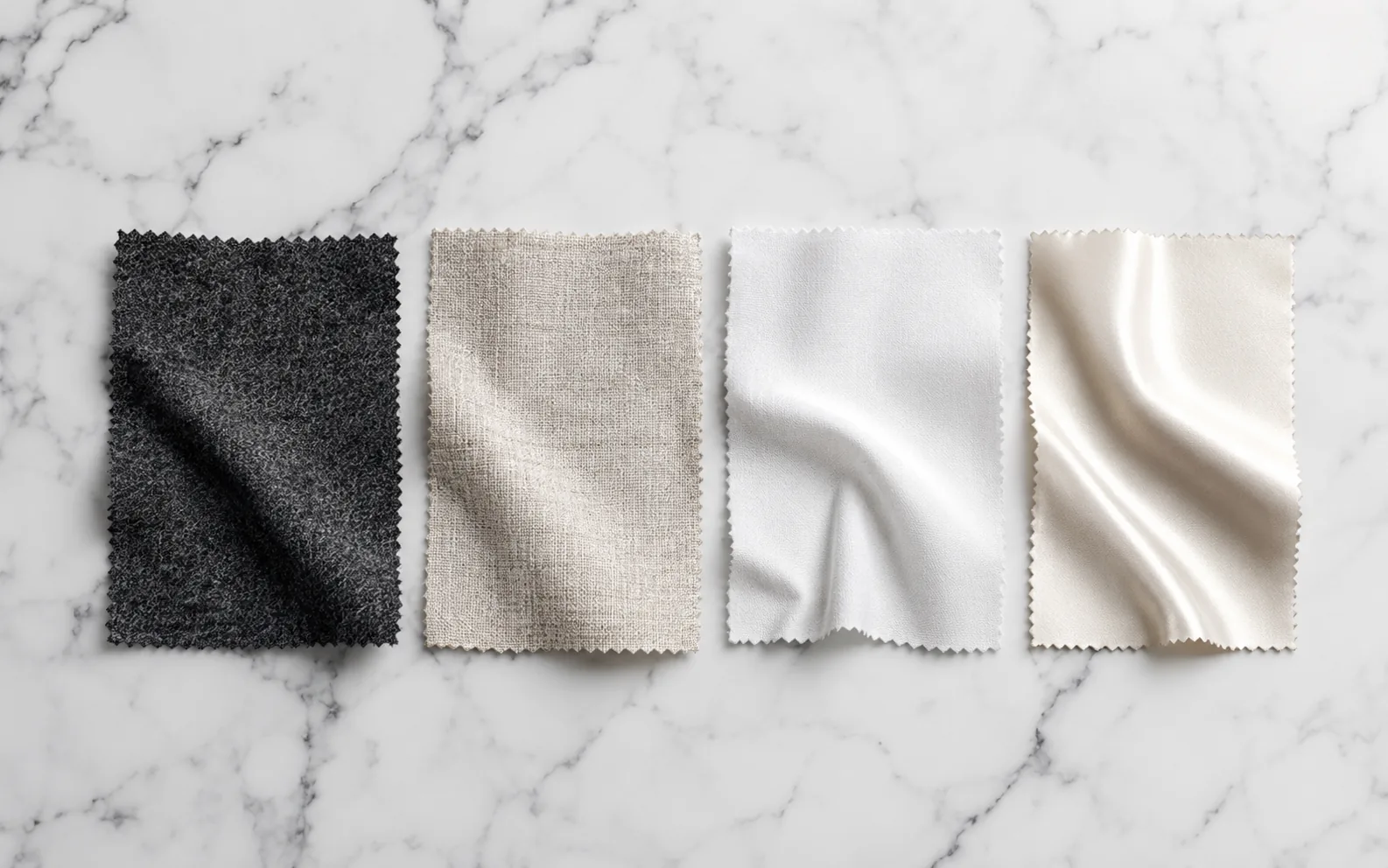
Plain weave is the simplest: threads crossing alternately, producing a smooth, flat surface. Poplin shirts and broadcloth are plain weave. Twill weave runs threads in diagonal ridges — think chinos, denim, and gabardine. It's more durable than plain weave and tends to drape more heavily. Satin weave creates a lustrous surface by floating warp threads over multiple weft threads, producing the sheen of silk linings and evening wear.
Beyond these three fundamentals, you'll encounter hopsack (a basket weave common in casual blazers), oxford (a textured weave used in shirting), and flannel (not a weave but a finish — brushed fibres that create softness and warmth). Each has its context. Learning to recognise them by sight and touch is a gradual process, but even basic literacy transforms your relationship with clothing.
Practical Application
When buying, touch the fabric before checking the label. Does it feel substantial or flimsy? Does it recover when you crush it in your fist, or does it hold wrinkles? Is the surface interesting — textured, subtly patterned, rich in colour — or flat and synthetic-looking? These tactile cues tell you more about quality and longevity than any marketing copy ever could.