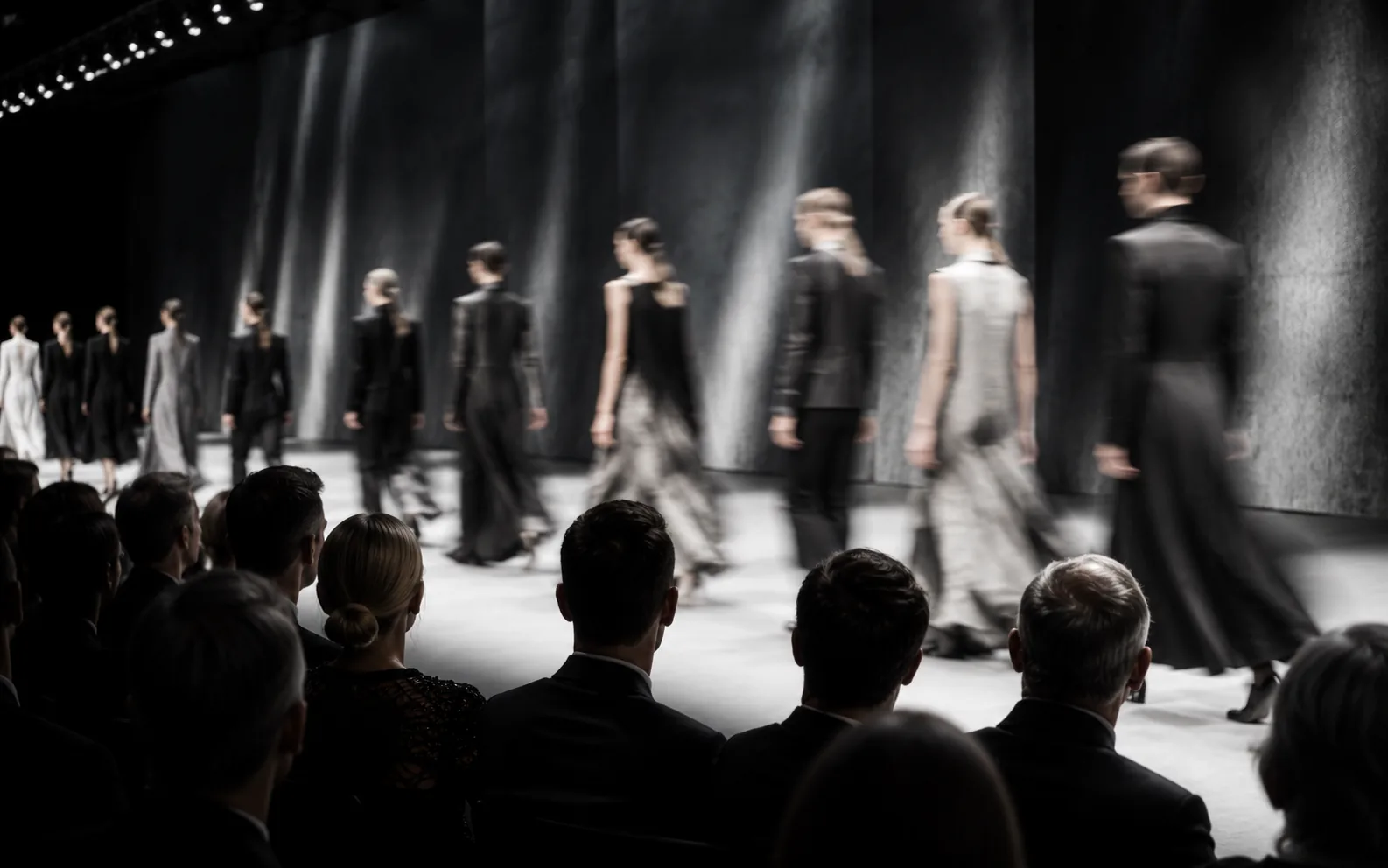
Twice a year, four cities — New York, London, Milan, and Paris — host concentrated bursts of runway shows that collectively determine what the rest of the world will be wearing 12 to 18 months later. The mechanism isn't always obvious. Most men would deny being influenced by fashion week presentations. Yet the width of their lapels, the rise of their trousers, and the silhouette of their outerwear are all downstream consequences of decisions made in those showrooms.
The Trickle-Down Timeline
A designer shows an exaggerated wide-leg trouser in February. By June, fashion editors have declared "the return of volume." By September, mid-market brands are producing their interpretations — less extreme, more wearable, but clearly derivative. By the following spring, high-street retailers have their versions in store at accessible price points. The man who buys slightly wider trousers from Uniqlo in March has been influenced by a Parisian runway show he never saw and probably doesn't know existed.
This timeline has compressed in the social media era. What once took 18 months now often happens in 9-12. Trends move faster, burn brighter, and die sooner than they did when fashion media was controlled by a handful of magazine editors.
Why Menswear Moves Slowly
Menswear evolves more gradually than womenswear. The fundamental silhouette of a man's suit has been recognisably consistent for over a century — jacket, trousers, constructed shoulders, buttoned front. What changes between decades is proportion: shoulder width narrows and broadens, trouser legs taper and widen, jacket lengths rise and fall by centimetres rather than inches.
This conservatism is partly cultural — men face social penalties for dressing "too fashionably" in most professional contexts — and partly structural. Men's wardrobes are built on investment pieces expected to last years. Dramatic seasonal shifts would render expensive garments obsolete too quickly for consumers to tolerate.
The Four Cities and Their Identities
Each fashion capital carries a distinct sensibility. New York tends toward the practical and commercially minded. London celebrates eccentricity and subculture. Milan prioritises luxury, craftsmanship, and sensuality. Paris remains the intellectual centre — conceptual, sometimes confrontational, always aware of fashion's status as cultural commentary. A menswear enthusiast who pays attention to all four gets a composite view of where clothing is headed from multiple philosophical angles.
What to Watch, What to Ignore
Not everything that appears on a runway is meant to be worn literally. Shows are part spectacle, part direction-setting, part commercial catalogue. The practical observer watches for recurring themes across multiple shows: if five unrelated designers all show relaxed shoulders, that's a signal. If one designer puts models in inflatable suits, that's theatre. Learning to distinguish signal from noise is the key skill of the fashion-literate consumer.