There are perhaps a dozen streets in the world whose names have become synonymous with an entire craft. Wall Street means finance. Harley Street means medicine. And Savile Row means tailoring — specifically, the highest expression of bespoke menswear that exists anywhere on earth.
Origins in Georgian London
The street itself was laid out in 1731 as part of the Burlington Estate development in Mayfair. Named after Lady Dorothy Savile, wife of the 3rd Earl of Burlington, it was initially residential — home to military officers and minor aristocrats. Tailors didn't arrive until the late 18th century, drawn by proximity to their clientele rather than any grand plan.
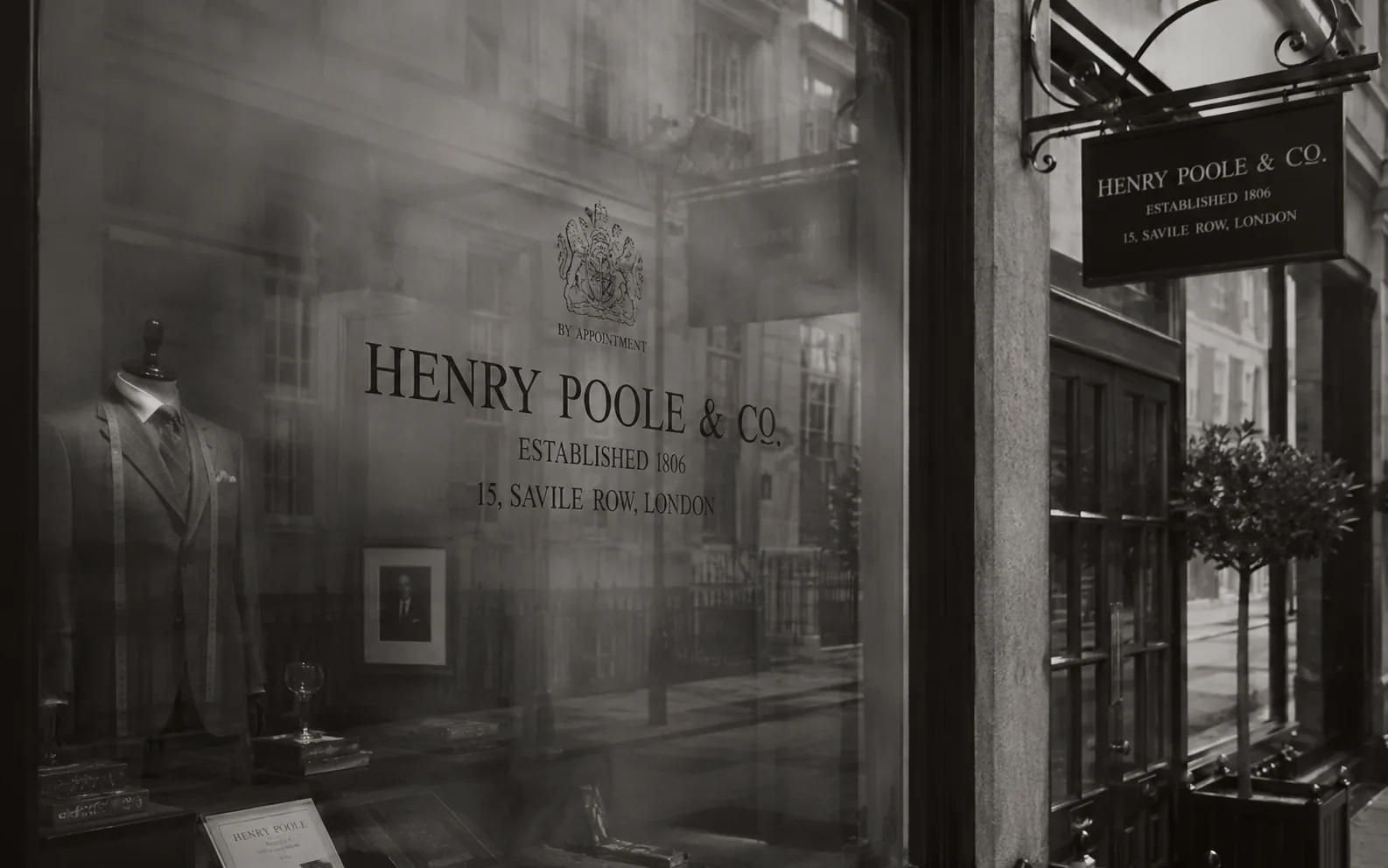
The first confirmed tailor on the Row was Henry Poole, who moved to number 32 in 1846 and quickly established a reputation for dressing European royalty. By the 1850s, a cluster of tailoring houses had formed, each specialising in slightly different aspects of the craft. The street's identity was set.
The Golden Age
Between 1880 and 1960, Savile Row operated at its zenith. A gentleman's tailor held patterns for thousands of clients, each cut to individual measurements taken over multiple fittings. A single suit required 80 hours of hand labour — canvas stitched by hand, buttonholes worked with silk thread, every seam pressed and shaped on wooden forms called horses.
The process was slow, expensive, and produced garments of extraordinary quality. A well-made Savile Row suit could last 30 years with proper care. The tailoring houses operated on reputation alone — no advertising, no retail windows, just a discreet brass plaque and centuries of accumulated expertise.
Decline and Reinvention
The 1960s brought disruption. Ready-to-wear fashion exploded. Young men rejected their fathers' tailors. Several historic houses closed or consolidated. When a property developer attempted to demolish parts of the Row in 2003, the tailoring community organised to protect their heritage, forming the Savile Row Bespoke Association the following year — a fight they largely won.
Today, the Row exists in a state of productive tension between heritage and modernity. Houses like Huntsman and Anderson & Sheppard maintain traditional methods while attracting younger clients. Newer arrivals bring contemporary sensibilities without abandoning the handcraft that defines the street.
Why It Still Matters
In an age of fast fashion and algorithmic sizing, Savile Row represents something increasingly rare: the patient application of human skill to individual need. A bespoke suit is not merely a garment — it's a collaboration between cutter and client, refined over fittings, adjusted to posture and preference, built to last decades rather than seasons. That this tradition survives at all is remarkable. That it thrives is something close to miraculous.